



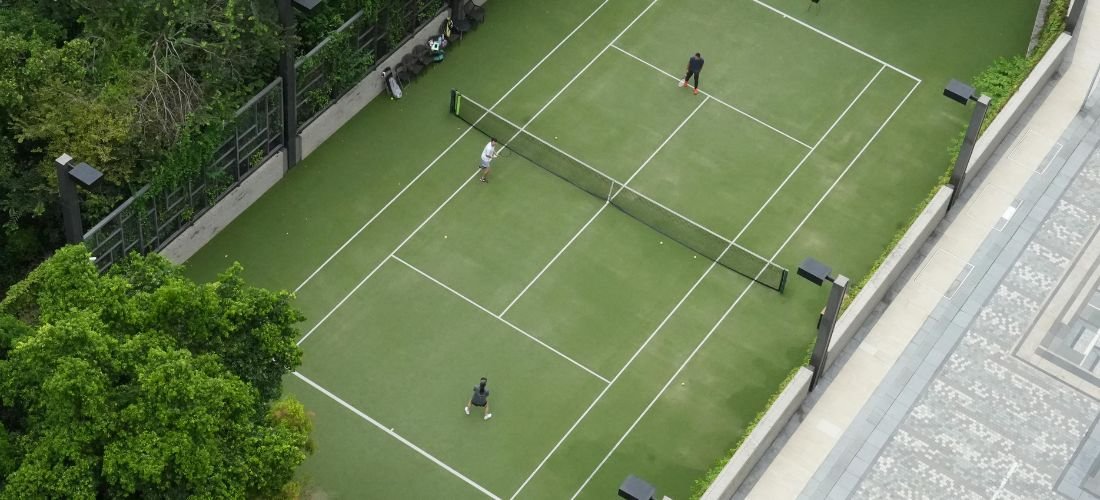
Tennis Academies in Delhi – Gallant Play
For a long time, learning tennis in Delhi meant getting into a club first. You needed a membership, or a parent who already played, or a friend willing to sign you in. That gate has come down. The number of tennis academies in Delhi has grown a fair bit in recent years, and plenty of them now run out of regular neighbourhood arenas instead of members-only clubs. A kid in South City can start. So can an adult in GK who has not held a racquet since college.
The downside of all that choice is the usual one. There is a lot of it, and not much to go on. Some academies have proper coaches and a real plan for taking you from clueless to capable. Others just unlock a court and wave you in. From a website, the two look identical.
That is the gap this is meant to fill. Why tennis is suddenly everywhere in the city, what decent coaching looks like at each stage, and what to actually check before you pay for a term. Plus how it runs at Gallant Play, which has multi-sport arenas across Delhi NCR with courts you can book casually or train on properly.
Growing Popularity of Tennis Training in Delhi
Several things are feeding this at once.
Start with the role models. Indian tennis has put faces on the screen for two decades now, and kids watch. A child catches a bit of a Grand Slam, sees the crowd, the speed, the drama of it, and a week later is asking for a racquet. Parents tend to say yes to tennis more readily than to a lot of sports, partly because it carries a certain weight. It reads as serious.
Then the adults. Singles tennis is punishing cardio that does not feel like cardio, and even an easy doubles set leaves you sweating. For someone who sits in meetings all day, two evenings a week chasing a ball around a court beats one more gym membership that dies a quiet death by February.
Access is the big one, though. The court is no longer locked behind a club. You can book one by the hour at a pay-and-play arena, join a coached batch in the same place, and find both tucked inside residential areas like Greater Kailash, Kailash Colony and Vikaspuri. Once the court is a ten-minute drive away, the excuses thin out and it turns into something you just do.
For families who want the competitive side, that exists too. India runs a real tennis circuit, age-group tournaments climbing up to state and national rankings, so a kid with talent has somewhere to point it. Most will not go down that road, and nothing about tennis demands it. But it is there if the spark catches.
Professional Tennis Coaching at Gallant Play
One detail about Gallant Play is worth getting out early, because it colours everything else. It is the coaching and arena side of Gallant Sports, a company that has spent years building and looking after sports surfaces around the country. So the courts here are not maintained by someone guessing. Surfaces are the parent company’s day job, and it tells in the state of the playing areas.
What that buys you on the tennis side is real courts inside arenas that also run a handful of other sports. Coaching is available at a clutch of Delhi spots, Greater Kailash 1, Greater Kailash 2, Kailash Colony, South City 1 and Vikaspuri, with more courts out in the NCR at Bahadurgarh and Panipat. Live anywhere in south Delhi and there is a fair chance one is close.
The coaching is run with a plan, not as a loose knockabout. Players sit in batches by level, get taught in an order that makes sense, and move up when their game is ready and not a minute before. The thing most parents care about is whether their kid is actually being watched, and the batches are sized so the coach can see and correct each player. You hear it in the way parents talk about the place afterwards, the same two notes again and again, coaches who are good with the kids and a child who is visibly getting better.
Quickest way to know if it suits you is to just show up for a trial. Book one on the coaching page, or skip the typing and WhatsApp the team on +91 8800666125.
Tennis Training Programs
You do not learn tennis in a single setting. A six-year-old gripping a racquet for the first time and a teenager chasing tournament points are doing two different sports, really, so coaching gets split into stages. Here is the shape of it, level by level.
Beginner Tennis Classes
This is the groundwork, and it is humbler than newcomers expect. Long before any proper rallying, beginners drill the basics that nobody posts on Instagram. The grip. Where to stand. Moving your feet to the ball rather than stretching for it from a standstill. A coach usually feeds short, soft balls at first, just so a beginner can connect and feel what a clean strike is like. Forehand first, then backhand, then an easy serve. There is no rush in any of it. At this stage clean contact and decent habits beat hitting hard every time.
Intermediate Tennis Coaching
When the strokes hold up on their own, the focus moves to control. Intermediate players learn to rally with intent, to put the ball somewhere on purpose instead of just getting it back, and to keep a point going rather than handing it away. Footwork gets serious attention now, because at this level most mistakes come from bad positioning, not a bad swing. The serve steadies, a second serve shows up, and players begin to feel how a point is built. Sessions get tougher, and proper match play starts working its way in.
Advanced Tennis Coaching
Advanced work is for players who own their strokes and want to compete. The conversation turns tactical, depth, spin, holding up under a heavy serve, returning when it matters. Players build a game plan, learn to read what the other side is doing, and train the head, because matches at this level are lost as much in the mind as in the legs. Nobody has to climb this far. But for the player who is in it for real, the ladder keeps going.
Tennis Court Facilities
Tennis depends on its court more than people realise. A poor surface does not only play badly, it skews the bounce, wears the legs out unevenly, and bumps up the odds of turning an ankle on a bad patch. Which is exactly why the condition of the courts should be near the top of your checklist at any academy.
Gallant Play has a real advantage here, and it is not a line from a brochure. The arenas sit under a company that builds and maintains sports surfaces for a living, so the courts get kept up instead of being run into the ground. Even, properly marked, cared for. Come a sticky May afternoon, or the week after the monsoon has hammered the city, that maintenance is the line between a court you can use and one you write off.
Past the surface, the venues are simply easy to use. Clean, enough room to run a session without bumping into things, and parked inside residential areas so the trip there is not an expedition. They are multi-sport arenas too, so the same place often has padel, basketball, cricket and the rest, which is a quiet relief in a household where no two people play the same game.
Tennis Coaching for Kids
Tennis is a great sport for a child, and not only for the fitness everyone expects. It does build coordination and stamina, sure. But it also drops a kid alone on a court and makes them figure things out on the fly, which not many sports do, and which does something good for them.
Coaching children is a different craft from coaching adults. The sessions run shorter and lean on play, drills become games, and the gear gets shrunk so a seven-year-old is not swinging a racquet built for a grown man. Early on you are chasing three things only. Contact, fun, and the kid wanting to return next week. The technique gets folded in slowly, once they are loose and enjoying it.
The coaches at Gallant Play handle kids across the age range and keep things warm rather than drill-sergeant, which is what young players actually respond to. A child who feels backed keeps turning up, and tennis being the slow burn it is, turning up is most of the job. And the confidence a kid picks up from learning to rally, then serve, then win a point off someone, has a way of following them off the court.
Tennis Coaching for Adults
A lot of grown-ups quietly decide they have missed the boat on tennis. They have not. Adults take it up all the time, and a good number get there quicker than children do, because they listen, they follow the why behind a drill, and they apply it.
Adults turn up for different reasons. Some are starting cold and want the foundations laid properly. Some played in school or college and want to scrape the rust off. A decent few are just after a regular, social way to stay fit that is more fun than a treadmill. Sessions that work make room for all of them, move at a grown-up pace, do not make a beginner feel daft, and get people rallying and playing light points fairly soon, because that is the enjoyable bit, and enjoyment is what brings adults back week after week.
The flexibility is part of the appeal. Beyond the coached batches, Gallant Play arenas work on a pay and play basis, so even outside your class you can grab a court and get a hit in whenever your week allows.
Skills Developed Through Tennis Training
Tennis demands a lot of you, and that is the whole reason it gives so much back. Proper coaching builds skills that lean on each other, and the day they start clicking together is the day the game gets addictive.
- Footwork. Tennis’s worst-kept secret among coaches and best-kept one among beginners. Nearly every clean shot begins with your feet arriving on time, and nearly every ugly one begins with them arriving late. Coaching hammers movement on repeat, the split step, the recovery back to the middle, the little stutter steps that line you up, until being in the right place stops feeling like a decision.
- Serve. The only shot nobody else interferes with, and somehow the hardest to make your own. You build a motion you can repeat, then layer on pace and placement, and eventually a second serve you can actually rely on under pressure. A solid serve banks free points before the rally has even started.
- Backhand. The wing most beginners would rather hide, and the one that quietly marks out the better players. Coaching grooves it, one hand or two depending on you, until it shifts from a shot you run around to a shot you happily hit.
- Forehand. Usually the first real weapon a player finds, and for most people the shot they live on. Training takes it from a nervous push to a stroke with weight and direction, the one you set up points to use.
- Match Strategy. The strokes are only equipment. The game is knowing which to pull out and when. Players learn to spot an opponent’s weak side, mess with their rhythm through pace and spin, and keep their head when the score gets tight. This is the bit that turns a good hitter into someone who actually closes out matches.
Benefits of Joining a Tennis Academy
You could try to teach yourself off clips and a garage wall. People do. But an academy hands you things a wall never can.
First, clean technique from the off. Go it alone and you collect bad habits at speed, a strangled grip, a stutter in the serve, feet rooted to the spot, and every one of them is a pain to undo months later. A coach spots them in week one and irons them out while it costs you nothing.
Second, a structure to climb. On your own you tend to hit a ceiling and just stop getting better, because you have run out of ideas for what to work on. An academy hands you the next rung, and the one after that, and someone keeping an eye on whether you are climbing. That keeps people going, kids most of all, who need to feel the progress to stay bothered.
Third, real opponents. Tennis is only properly learned by playing points against other humans, and an academy keeps a supply of hitting partners around your standard on tap. The social side is no small thing either, whatever people pretend. Showing up to the same faces every week turns a lonely slog into something you look forward to.
And last, the place itself. Decent courts, the right kit, a safe and organised spot to play. None of that is something you can rig up in a park.
Choosing the Right Tennis Academy in Delhi
Not every academy has earned your money, and a polished website is close to no evidence at all. A handful of checks are worth your time before you sign.
Go and see the courts, in person if you can manage it. Look hard at the surface, the lines, the general state of the place. A court that is cared for usually means an academy that cares about the rest of it. A scuffed, cracked one is telling you something, so listen.
Dig into the coaching, not just the venue. Who is actually on court taking the session, what have they done, and how many players are crammed into a batch. One coach lobbing balls at twenty kids is not coaching, it is babysitting with a racquet. Smaller groups where you actually get seen and corrected are worth paying more for.
Ask how they handle levels. A nervous beginner should not be sharing a batch with players miles ahead, and there should be an obvious route to move up as you get better. A serious academy explains all this without stumbling.
And be honest about the commute. Delhi traffic does not care about your good intentions. The finest academy in the city is worthless if the drive makes you bail on half your sessions. A solid court close to home that you will genuinely keep going to beats a marginally better one across town that you ditch inside a month.
Then ask for a trial. Any academy that trusts its own coaching will happily let you try before paying. If they wriggle out of it, you have learned something already. Gallant Play, for instance, lets you start on a trial, so you can size up the courts and the coaching for yourself first.
Why Gallant Play is a Preferred Tennis Training Destination
Stack it all up and the case for Gallant Play is a practical one.
Coverage, to begin with. Tennis runs across several Delhi NCR arenas, courts at Greater Kailash 1, Greater Kailash 2, Kailash Colony, South City 1 and Vikaspuri, with Bahadurgarh and Panipat further afield. For most south and central Delhi families, a court is not a long haul.
Then the courts. As part of Gallant Sports, which builds and maintains sports surfaces across India, the arenas are kept up by people who do exactly this for a living. The playing areas stay in good nick, and in tennis that is not a perk, it is most of what you are paying for.
The coaching is planned around where each player actually is, the batches are run so people get looked at properly, and the feedback from parents keeps circling back to the same things, coaches who are good with the kids and steady improvement you can see. On top of that these are multi-sport venues, so a family juggling tennis, cricket and a couple of other sports is not driving to five different places. And with coached batches and pay-and-play booking under the same roof, you can take lessons and still wander in for a casual hit when the mood strikes.
To enroll or book a trial, head to gallantplay.com/coaching, email info@gallantplay.com, or message the team on WhatsApp at +91 8800666125.
Final Thoughts
Tennis pays back the people who hang in there. The early going is rough, all mistimed swings and balls into the net, and then one session the timing arrives and you are hooked for good. It is good for the body, good for the head, and one of the few sports you can keep playing into old age. The only real variable is where you learn it. The court, the coach, the structure around you, that is what decides whether those clumsy first weeks become a habit or an excuse to quit.
So if you have been weighing up tennis academies in Delhi, do not overthink it. Pick a couple near you, go look at the courts, watch a session run, take a trial. You will know quickly enough whether it clicks. And if a well-run arena with properly kept courts and coaches who actually watch the players is what you want, Gallant Play is a strong place to begin.
FAQs
1. What is the right age for a child to start tennis?
Answer: Around five or six tends to be the sweet spot, once a child can follow instructions and swing a light, junior-sized racquet without it dragging them over. Younger than that is usually more play than coaching. And there is no cut-off at the top end, since beginner batches take teenagers and adults just as happily.
2. Do I need my own racquet to begin?
Answer: Not on day one. Most academies can lend you something for a trial or your first few sessions, so you can start before spending anything. Once you know you are sticking with it, a racquet matched to your level and grip is worth buying. Ask the coaches what suits you.
3. How long does it take to get decent at tennis?
Answer: You can be rallying within a few weeks of regular practice and playing simple points soon after. Getting genuinely good takes months, because tennis has a lot of moving parts to assemble. The real lever is how often you play. Two sessions a week is a sensible rhythm.
4. Does Gallant Play offer tennis coaching for both kids and adults?
Answer: Yes. Gallant Play runs structured tennis coaching in Delhi for children and adults across its Delhi NCR arenas, Greater Kailash, South City and Vikaspuri among them, with players grouped by level so everyone trains at a pace that fits.
5. Can I just book a court without joining a coaching batch?
Answer: Yes. Alongside the coaching, Gallant Play arenas run a pay-and-play model, so you can book a court by the slot and play whenever it suits, with or without signing up for regular classes.
6. How do I enroll or book a trial?
Answer: Start on the coaching page at gallantplay.com/coaching, email info@gallantplay.com, or WhatsApp the team on +91 8800666125. A trial is the fastest way to get a feel for the courts and the coaching before you commit to anything.
Start Your Coaching Journey
Tell us a bit about yourself and we’ll help you get started with the right training program. Structured coaching programs.
- Structured coaching programs
- Multiple locations across Delhi-NCR
- Suitable for all skill levels