



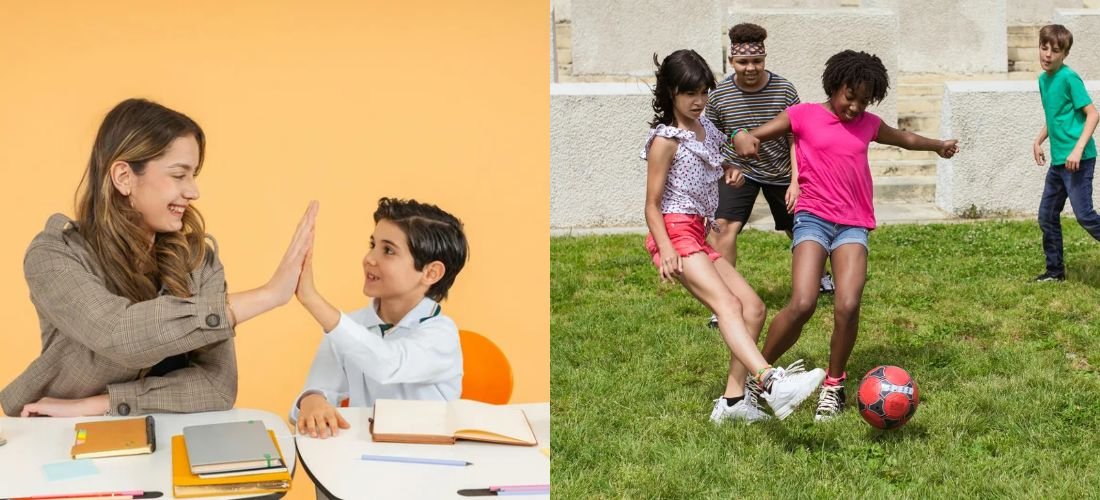
For many school-going children, managing homework, exams, sports practice, and personal time can feel challenging. Parents also face an important question: How can children continue playing their favourite sports without affecting their studies?
The good news is that education and sports do not have to compete with each other. With a realistic daily routine, proper time management and support from parents and coaches, children can make time for both.
Sports such as football, cricket, badminton, basketball, swimming, skating, and tennis provide opportunities to stay active, develop skills and enjoy time with other children. At the same time, a consistent study routine helps students complete schoolwork and prepare for examinations.
The key is to create a balanced schedule that includes studies, sports training, meals, sleep, relaxation, and family time.
In this guide, we explain how students can balance school studies and sports training, how parents can support them, and how to build a routine that works throughout the school year.
1. Why Is It Important to Balance Studies and Sports?
School education helps children develop academic knowledge, while sports give them opportunities to learn physical skills, teamwork, discipline and confidence.
Both are important parts of a child’s overall development.
However, problems can arise when children have an overloaded schedule. Spending too much time on homework and screen-based activities can leave little room for physical activity. On the other hand, attending too many training sessions without enough time for schoolwork and recovery can create unnecessary pressure.
A balanced routine helps children:
- Complete homework on time.
- Attend regular sports training sessions.
- Prepare for school tests and examinations.
- Develop healthy daily habits.
- Get enough sleep and recovery time.
- Enjoy hobbies and family activities.
- Build confidence in both academic and sporting activities.
Parents should remember that every child has different interests, learning needs and energy levels. A timetable that works for one student may not work for another.
The goal should not be to fill every available hour. It should be to give children enough time to learn, play, rest and enjoy their childhood.
2. Benefits of Sports for School-Going Children
Sports are not simply an activity to fill children’s free time. Regular physical activity supports their physical health and can contribute to several aspects of development.
A. Supports Physical Fitness
Activities such as running, swimming, football, basketball, and skating help children develop physical fitness, coordination, balance, and movement skills.
The World Health Organization recommends that children and adolescents aged 5–17 should do an average of at least 60 minutes of moderate-to-vigorous physical activity per day across the week. Most of this activity should be aerobic. Vigorous activities and activities that strengthen muscles and bones should also be included on at least three days a week.
This activity can include organised sports, active play, walking, cycling, and other movement—not only formal coaching sessions.
B. Develops Time Management Skills
Children who follow a regular sports schedule learn to plan their day.
For example, a student attending football coaching after school may need to finish homework earlier, pack sports equipment in advance, and prepare school materials for the next day.
These small habits can encourage responsibility and better organisation.
C. Builds Confidence
Learning a new skill, improving performance, and participating in team activities can help children become more confident.
A child who initially struggles with badminton or swimming may gradually become more comfortable through regular practice and encouragement.
D. Encourages Teamwork and Communication
Team sports such as football, basketball, and cricket give children opportunities to communicate, cooperate, and understand different roles.
Individual sports such as swimming, tennis, and skating can help children develop self-discipline and personal responsibility.
You can also read our guide on Individual vs Team Sports for Kids: Which Is Better? to understand the differences between these activities.
E. Provides a Break from Academic Routine
Children spend several hours in classrooms, completing assignments and studying.
Sports offer a different type of activity that allows them to move, interact with others and take a break from sitting for long periods.
Physical activity should complement schoolwork, not become another source of pressure.
3. How to Create a Daily Schedule
The first step towards balancing studies and sports is creating a routine that matches the child’s school timings, homework load, training schedule and sleep requirements.
Instead of making a complicated timetable, divide the day into a few simple sections.
Step 1: Understand School Timings
Start by noting the time your child leaves for school and returns home.
Also consider travel time, school assignments, tuition classes and other regular commitments.
This will help you identify suitable hours for sports training.
Step 2: Set a Fixed Homework Time
Children should have a regular period for completing schoolwork.
For example, they may study for 45 minutes to one hour after returning home and taking a short break, depending on their age, workload and concentration.
Break larger assignments into smaller tasks rather than expecting children to finish everything at once.
Step 3: Choose Suitable Sports Training Hours
Select a training slot that does not regularly interfere with school attendance, important study periods or sleep.
An evening session may work for some students, while a morning session may suit others.
The right timing depends on the child’s routine and the academy’s available batches.
Step 4: Include Meals and Recovery
Children need time to eat properly, hydrate and relax between school and sports activities.
Avoid scheduling training immediately after a heavy meal. Allow time for the child to prepare, travel to the venue and complete the session without rushing.
Step 5: Keep Some Free Time
A timetable should not make children feel that every minute is controlled.
Leave time for hobbies, friends, family and unstructured play. This helps make the routine sustainable.
4. A Practical Daily Timetable for Students
Here is an example of how a school-going child can organise a regular weekday.
The timings are illustrative and should be adjusted according to school hours, age, travel time and coaching duration.
| Time | Activity |
|---|---|
| 6:30 AM | Wake up and get ready |
| 7:00 AM | Breakfast and school preparation |
| 7:30 AM – 2:00 PM | School |
| 2:00 PM – 3:00 PM | Lunch and rest |
| 3:00 PM – 4:00 PM | Homework or study session |
| 4:00 PM – 4:30 PM | Snack and preparation |
| 4:30 PM – 6:00 PM | Sports training |
| 6:00 PM – 6:30 PM | Freshen up and relax |
| 6:30 PM – 7:30 PM | Revision or school assignments |
| 7:30 PM – 8:30 PM | Dinner and family time |
| 8:30 PM – 9:00 PM | Prepare school bag and next day’s plan |
| 9:00 PM onwards | Bedtime routine and sleep |
This is only a sample timetable, not a fixed rule. Younger children may need an earlier bedtime, and some students may need more study time depending on their school workload.
The important point is to maintain a routine that provides sufficient time for academics, physical activity and rest.
5. How to Manage Homework Alongside Sports Training
Homework can become difficult to manage when children have regular coaching sessions. A few simple habits can make the process easier.
Complete Important Homework Early
Encourage children to finish urgent assignments before going for training whenever practical.
This reduces the chances of unfinished schoolwork creating stress later in the evening.
Use Short Study Sessions
Long study sessions may be difficult for younger children to manage.
Divide the work into smaller periods with short breaks. For example:
- 30 minutes of focused study
- 5-minute break
- Another 30 minutes of study
- Short revision of completed work
The duration should be suitable for the child’s age and attention span.
Prepare School Materials in Advance
Pack books, notebooks, stationery and the school bag the previous evening.
Similarly, keep sports clothing, shoes, water bottles and other training equipment ready.
This prevents children from wasting time searching for things between activities.
Prioritise Assignments
Help children identify which assignments are urgent and which can be completed later.
A simple task list can make schoolwork easier to manage.
Reduce Unnecessary Screen Time
Watching videos, playing mobile games and browsing social media can consume time that could be used for homework, sports or sleep.
Set reasonable screen-time boundaries while allowing children to enjoy age-appropriate entertainment.
6. How to Balance Sports During Exams
Examination periods can be stressful for students and parents. Some families stop all sports activities during exams, while others try to maintain the regular training schedule.
The right approach depends on the child’s preparation, stress levels and academic requirements.
Plan Ahead for Examinations
Check the school examination calendar in advance.
Create a revision timetable that includes important subjects, assignments and practice tests.
This helps prevent last-minute preparation.
Adjust Training Frequency if Needed
If the child has an important examination approaching, temporarily reducing the number or duration of coaching sessions may be practical.
However, stopping all physical activity is not necessary for every student.
Short walks, light practice or recreational play can help children maintain an active routine when their study workload increases.
Avoid Adding Extra Pressure
Do not compare a child’s academic performance with another student’s sports achievements.
Encourage steady preparation and realistic goals.
Resume the Regular Routine Gradually
After examinations, children can return to their usual sports schedule.
If they have taken a break, training intensity should increase gradually according to their fitness and the coach’s guidance.
7. Tips for Better Time Management
Children do not need a complicated productivity system. A few simple habits can make a noticeable difference.
1. Make a Weekly Timetable
Plan school hours, homework, training sessions and important activities at the beginning of each week.
Include examination dates, projects and competitions.
2. Set Small Daily Goals
Instead of writing “study mathematics”, set a clear goal such as completing two chapters or solving ten practice questions.
Small goals are easier to understand and track.
3. Avoid Last-Minute Preparation
Encourage children to revise regularly rather than studying everything just before a test.
A little revision each day can reduce pressure during examination periods.
4. Keep Sports Equipment Ready
Prepare shoes, uniforms, water bottles and other equipment before the training day.
This saves time and helps children reach practice on time.
5. Follow a Consistent Sleep Routine
Sleep is an important part of children’s learning, physical development and recovery.
Children aged 6–12 generally need 9–12 hours of sleep per 24 hours, while teenagers aged 13–18 generally need 8–10 hours.
Avoid extending sports sessions or late-night study periods at the expense of regular sleep.
6. Review the Schedule Every Week
Some weeks may include school projects, tournaments, family events or examinations.
Review the timetable and make adjustments instead of trying to follow an unrealistic routine.
8. The Role of Parents in Supporting Children
Parents play an important role in helping children balance school and sports.
Their job is not to make every decision for the child. It is to provide guidance, encouragement and a supportive environment.
Understand Your Child’s Interests
Ask children which sports they enjoy and what they want to achieve.
Some may enjoy team games such as football and basketball, while others may prefer swimming, badminton, tennis or skating.
Allow them to explore different activities before expecting them to specialise.
Avoid Comparing Children
Every child develops at a different pace.
Avoid comparing academic marks, sports performance or training progress with siblings, classmates or other players.
Focus on individual improvement.
Communicate with Teachers and Coaches
If schoolwork or training begins to feel overwhelming, discuss the schedule with the relevant teacher or coach.
They may help identify practical adjustments.
Appreciate Effort, Not Only Results
Praise children for completing assignments, attending training, improving their skills and following their routine.
This encourages consistency without making every activity about winning or scoring marks.
Notice When They Need a Break
Children may occasionally feel tired or lose interest in activities.
Listen to them and understand the reason before increasing their workload.
Rest and recovery are important parts of sports participation.
9. How Coaches Can Help Students Maintain Balance
Coaches also play an important role in helping school-going athletes manage their commitments.
A good coaching environment should support children’s development without creating unnecessary pressure.
Keep Training Age-Appropriate
Training intensity, session duration and skill development should suit the child’s age and experience.
Beginners should not be expected to follow the same routine as advanced players.
Encourage Consistency
Regular and well-planned sessions can help children develop their skills without needing excessive training hours.
Understand School Commitments
Coaches should be aware of major examination periods, school events and other important commitments.
Where possible, training schedules should be planned with these factors in mind.
Promote Recovery and Safety
Warm-ups, cool-downs, hydration, suitable rest and proper supervision should form part of children’s training.
If a child experiences persistent pain, unusual tiredness or repeated injuries, parents should seek appropriate professional advice.
Encourage Enjoyment
Children are more likely to remain interested in sports when they enjoy the learning process.
Training should include skill development, practice games and positive encouragement—not only competition.
10. Signs That a Child’s Schedule Is Too Busy
A balanced routine should support a child’s development, not make them feel exhausted every day.
Parents should pay attention to changes in behaviour and physical well-being.
Some warning signs include:
- Regular complaints of tiredness
- Difficulty waking up in the morning
- Declining interest in sports
- Frequent missed homework
- Poor concentration
- Increased irritability
- Persistent muscle or joint pain
- Difficulty getting enough sleep
- Repeated injuries or slow recovery
If these signs continue, review the child’s schedule and reduce unnecessary commitments.
Speak with the coach, school and a healthcare professional when appropriate.
Remember that taking a break when needed is not a failure. It is part of maintaining a healthy relationship with sports.
11. Choosing the Right Sports Training Programme
The right academy can make it easier for children to manage sports alongside school.
Before enrolling, parents should consider:
Convenient location: A nearby facility can reduce travel time and make regular attendance easier.
Suitable batch timings: Look for sessions that fit around school and homework.
Experienced coaches: Coaches should understand age-appropriate training and how to work with children.
Safe facilities: Check playing surfaces, equipment, cleanliness, supervision and general safety arrangements.
Suitable batch sizes: Children should receive enough attention during practice.
Clear communication: Parents should know the training schedule, fees, attendance arrangements and equipment requirements.
If you are comparing academies, read our Parent’s Checklist for Choosing a Multi-Sport Facility.
You can also explore the Kids Sports Training Guide for Parents in India for more information about choosing activities and understanding children’s training needs.
12. How Gallant Play Supports Children’s Sports Development
Finding the right sports training programme is easier when parents have access to structured coaching and suitable sports facilities.
Gallant Play offers multi-sport coaching programmes and sports arenas across Delhi NCR, with different activities available at different locations.
Depending on the arena, children can explore sports such as:
- Football
- Cricket
- Basketball
- Badminton
- Tennis
- Swimming
- Skating
- Gymnastics
Not every sport is available at every location. Parents can check the available activities and coaching options before selecting an arena.
Gallant Play’s sports coaching programmes provide a starting point for parents who want to explore training options for their children.
A nearby coaching centre with suitable timings can make it easier to include regular sports practice in a school-day routine.
The aim is to help children enjoy sports, develop skills and build an active lifestyle while keeping their academic and personal commitments in balance.
13. Frequently Asked Questions
1. Can children manage both school studies and sports training?
Yes. Children can participate in sports while continuing their education when their schedule includes realistic study hours, suitable training sessions, meals, sleep and recovery time.
2. How many hours should a student spend on sports?
There is no single training duration suitable for every child. The amount of structured coaching depends on age, sport, experience and recovery needs. WHO recommends an average of at least 60 minutes of moderate-to-vigorous physical activity daily for children and adolescents aged 5–17 across the week. This includes active play and other physical activities, not only formal coaching.
3. Should children stop sports during examinations?
Not necessarily. Parents can adjust training frequency or intensity during examination periods while keeping some suitable physical activity in the routine. The schedule should reflect the child’s preparation and stress levels.
4. Does sports training affect academic performance?
Sports do not automatically affect academic performance negatively. Physical activity is associated with benefits for health and cognitive outcomes. However, children still need adequate study time, sleep and a manageable training schedule.
5. What is the best time for children to attend sports coaching?
The best time depends on school timings, travel, homework and the child’s sleep routine. Morning or evening sessions may work, provided they do not create unnecessary pressure or reduce rest.
6. How can parents help children manage homework and sports?
Parents can create a weekly timetable, set small study goals, prepare equipment in advance and communicate with teachers and coaches. Children should also be involved in planning their own routine.
7. Which sports are suitable for school-going children?
Football, cricket, basketball, badminton, tennis, swimming and skating are some options. The right activity depends on the child’s interest, age, abilities and access to suitable coaching.
8. How much sleep do school-going children need?
Children aged 6–12 generally need 9–12 hours of sleep per day, while teenagers aged 13–18 generally need 8–10 hours. Regular sleep is important for learning, growth and recovery.
9. Is it better to choose one sport or multiple sports?
It depends on the child’s interests and goals. Trying different sports can help children discover what they enjoy. As they grow older, they may choose to focus more on a particular activity.
10. How do I know if my child has too many activities?
Frequent tiredness, poor sleep, missed assignments, reduced interest in sports and persistent pain may indicate an overloaded routine. Review the schedule and make suitable adjustments.
Conclusion
Balancing school studies and sports training is about creating a routine that supports the child’s overall development.
Children need time to learn, practise sports, spend time with family, enjoy hobbies and get enough sleep. Parents and coaches can work together to make these activities fit into a realistic schedule.
Instead of treating studies and sports as competing priorities, encourage children to enjoy both. With consistent planning, positive support and age-appropriate training, children can develop healthy habits that benefit them both inside and outside the classroom.
At Gallant Play, the focus is on making sports accessible and enjoyable through structured coaching and multi-sport experiences. Help your child find an activity they enjoy and make physical activity a positive part of everyday life.