


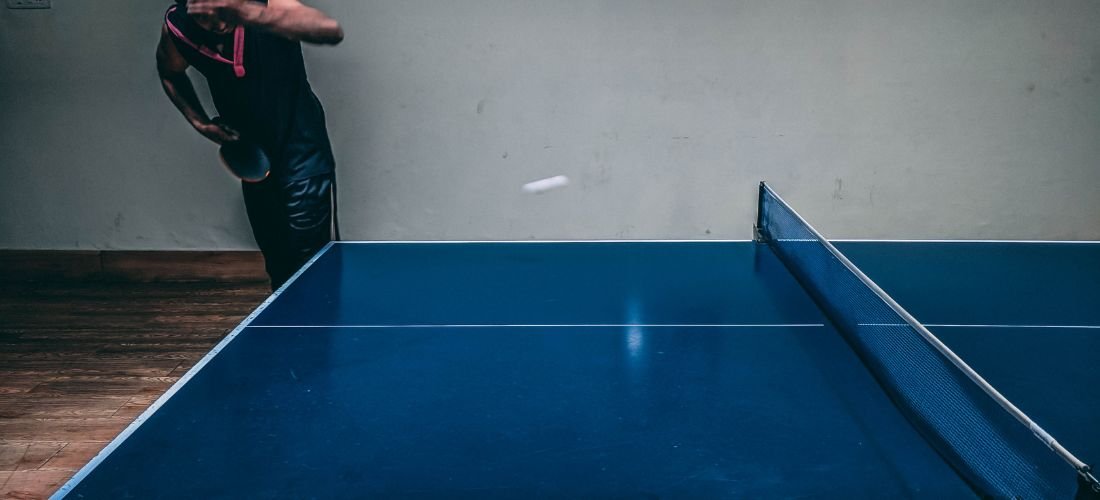
How to play table tennis is a question many beginners ask when they first pick up a bat. Table tennis is easy to start, fun to play, and surprisingly deep once you learn the basics. With the right guidance, practice, and mindset, anyone can learn table tennis step by step and enjoy the game confidently.
This guide is written in simple language, just like a coach explaining things to a student. It focuses on real fundamentals, practical tips, and clear progression so you don’t feel confused or overwhelmed.
What Is Table Tennis?
Table tennis (also known as ping pong) is a fast-paced indoor sport played between two players (singles) or four players (doubles). Players hit a lightweight ball across a table using a small bat, aiming to score points by making the ball land on the opponent’s side in a way they can’t return.
Table tennis is played worldwide at schools, clubs, homes, and professional levels. It improves reflexes, coordination, fitness, and focus, making it suitable for all ages.
Why Learn Table Tennis?
Before learning how to play table tennis, it’s good to understand why this sport is worth your time.
- Easy to start, hard to master
- Improves hand-eye coordination
- Boosts concentration and reflex speed
- Low injury risk compared to many sports
- Can be played casually or competitively
- Suitable for kids, adults, and seniors
Many players start table tennis as a hobby and later join a tennis academy or club to improve their skills in a structured way.
Basic Equipment Needed for Table Tennis
You don’t need expensive gear to start table tennis, but the right basics matter.
Essential Table Tennis Equipment
| Equipment | Description | Beginner Tip |
|---|---|---|
| Table Tennis Table | Standard size with net in the middle | Any indoor table works for practice |
| Table Tennis Bat | Wooden blade with rubber on both sides | Choose a pre-assembled beginner bat |
| Table Tennis Ball | Lightweight plastic ball (40+) | Use training balls for practice |
| Net & Post | Divides the table into two halves | Tight and level net is important |
| Shoes | Non-marking indoor shoes | Good grip helps footwork |
For beginners, it’s better to focus on learning technique than spending money on professional equipment.
Official Table Tennis Rules (Beginner-Friendly)
Understanding the basic rules will help you play confidently from day one.
- A match is usually played to 11 points
- You must win by at least 2 points
- Each player serves 2 points in a row
- Serve must bounce once on your side, then opponent’s side
- The ball must be visible during serve
- The bat can hit the ball only once per shot
You don’t need to memorize all rules at once. Start playing, and rules will become clear naturally.
Fundamental Skills to Learn in Table Tennis
If you want to learn how to play table tennis properly, you must focus on fundamentals. Skipping basics often leads to bad habits that are hard to fix later.
The core skills are:
- Grip
- Stance
- Footwork
- Forehand drive
- Backhand drive
- Push shots
- Serve
- Return of serve
- Match play basics
Let’s break these down step by step.
Step 1: Correct Table Tennis Grip
Your grip is the only connection between your body and the bat. A poor grip limits control, power, and spin.
Types of Table Tennis Grip
There are two main grips used worldwide:
- Shakehand Grip (most common)
- Penhold Grip (less common, mostly Asian style)
Shakehand Grip (Recommended for Beginners)
This grip feels like shaking hands with the bat.
How to hold it:
- Hold the handle naturally
- Thumb rests on one side of the rubber
- Index finger rests lightly on the other side
- Keep the grip relaxed, not tight
A relaxed grip allows better control and smoother strokes.
Step 2: Proper Stance and Ready Position
A good stance helps you move quickly and stay balanced.
Correct Table Tennis Stance
- Feet slightly wider than shoulder-width
- Knees bent
- Body leaning slightly forward
- Bat in front of your body
- Stay relaxed, not stiff
This is also called the ready position, used before every shot.
Many beginners stand too straight, which slows reaction time. Staying low improves balance and speed.
Step 3: Basic Footwork in Table Tennis
Footwork is often ignored by beginners, but it is critical.
Table tennis is not played standing still. You must move small distances quickly to reach the ball.
Key Footwork Tips
- Stay on your toes, not flat-footed
- Move sideways more than forward
- Take small, quick steps
- Always return to ready position
Good footwork helps you reach the ball early and play controlled shots.
Step 4: Forehand Drive (First Attacking Shot)
The forehand drive is one of the most important strokes in table tennis.
How to Play a Forehand Drive
- Stand sideways to the table
- Bring the bat slightly back
- Swing forward smoothly
- Hit the ball at the top of the bounce
- Follow through toward the target
Focus on control and consistency, not power. Beginners often try to hit too hard, causing mistakes.
Step 5: Backhand Drive
The backhand drive is played on the non-dominant side of your body (left side for right-handed players).
Backhand Drive Basics
- Elbow slightly in front of body
- Short and controlled movement
- Use forearm, not full arm swing
- Keep bat angle slightly closed
The backhand drive is compact and quick, making it very effective during rallies.
Step 6: Push Shot (Backspin Control Shot)
Push shots are used when the ball has backspin, especially during short rallies and serve returns.
Backhand Push
- Open bat angle slightly
- Push under the ball
- Use gentle forward motion
- Keep the ball low
Backhand push is usually easier than forehand push for beginners.
Step 7: Forehand Push
Forehand push feels awkward at first but is important.
Forehand Push Tips
- Step slightly toward the ball
- Contact the ball underneath
- Keep wrist relaxed
- Focus on placement, not speed
Being able to push from both sides gives you better control during matches.
Step 8: Serve in Table Tennis
Serve is the only time you have full control over the ball. A good serve gives you an advantage before the rally starts.
Basic Serve Rules
- Ball must rest on open palm
- Toss ball upward (minimum 16 cm)
- Hit the ball behind the table
- Ball must bounce on both sides
Beginner Serve Types
- Backspin serve
- Simple fast serve
Start with consistency. Spin and variation can be added later.
Step 9: Return of Serve
Returning serve is difficult for beginners, but it becomes easier with practice.
Simple Return Strategy
- If the ball has backspin → Push
- If the ball has topspin → Drive
- Watch opponent’s bat movement
- Stay calm and balanced
Reading spin takes time, so don’t get frustrated early.
Step 10: Basic Match Play Strategy
Once you know the strokes, it’s time to play matches.
Beginner Match Strategy
- Keep the ball on the table
- Avoid risky shots
- Play to opponent’s weakness
- Focus on consistency
At beginner level, most points are won due to opponent mistakes, not powerful shots.
Simple 10-Day Table Tennis Training Plan
This table gives a clear structure for learning table tennis step by step.
| Day | Focus Area |
|---|---|
| Day 1 | Grip |
| Day 2 | Stance |
| Day 3 | Footwork |
| Day 4 | Forehand Drive |
| Day 5 | Backhand Drive |
| Day 6 | Backhand Push |
| Day 7 | Forehand Push |
| Day 8 | Serve |
| Day 9 | Return of Serve |
| Day 10 | Match Play |
Spending 4–5 hours per skill gives strong improvement over time.
Common Mistakes Beginners Make
Avoiding these mistakes will speed up your progress.
- Holding the bat too tightly
- Standing straight instead of low
- Hitting too hard too early
- Ignoring footwork
- Not practicing serves
Correcting these early helps you improve faster.
Role of Tennis Training and Tennis Academy
Structured tennis training helps beginners avoid bad habits. Joining a tennis academy or local club gives:
- Professional guidance
- Regular practice partners
- Proper technique correction
- Match experience
Even one or two coaching sessions can improve your game significantly.
Fitness Tips for Table Tennis Players
You don’t need heavy gym training, but basic fitness helps.
- Light cardio for stamina
- Leg exercises for balance
- Stretching for flexibility
- Eye-hand coordination drills
Staying fit improves reaction time and consistency.
How Long Does It Take to Learn Table Tennis?
- Basic rallies: 2-3 weeks
- Consistent play: 2-3 months
- Competitive beginner level: 6-12 months
Progress depends on practice quality, not just time.
Final Thoughts
Learning how to play table tennis is a rewarding journey. Table tennis looks simple, but mastering it requires patience, practice, and proper fundamentals. Focus on grip, stance, footwork, and consistency before worrying about advanced shots.
Whether you play at home, school, a club, or a tennis academy, remember one thing: improvement comes from regular practice and enjoying the process.
Start slow, stay consistent, and most importantly—have fun playing table tennis.
FAQs
1. What is table tennis and how is it played?
Table tennis is an indoor sport where players hit a lightweight ball across a table using a bat. Points are scored when the opponent fails to return the ball correctly.
2. How can a beginner learn how to play table tennis?
A beginner should start by learning the basics like grip, stance, footwork, and simple strokes such as forehand and backhand drives. Regular practice and proper tennis training help improve faster.
3. What equipment is required to play table tennis?
To play table tennis, you need a table tennis table, a bat (racket), a 40+ plastic ball, a net, and comfortable indoor shoes with good grip.
4. How long does it take to learn table tennis properly?
Most beginners can start rallying within a few weeks. With consistent practice or coaching at a tennis academy, basic match-level skills can be developed in 2–3 months.
5. What are the basic rules of table tennis?
A game is played up to 11 points, with players serving two points each. The serve must bounce once on both sides of the table, and the ball must be returned after one bounce.
6. Is joining a tennis academy necessary to learn table tennis?
It is not mandatory, but joining a tennis academy or taking professional tennis training helps correct mistakes early and improves technique, consistency, and confidence.