



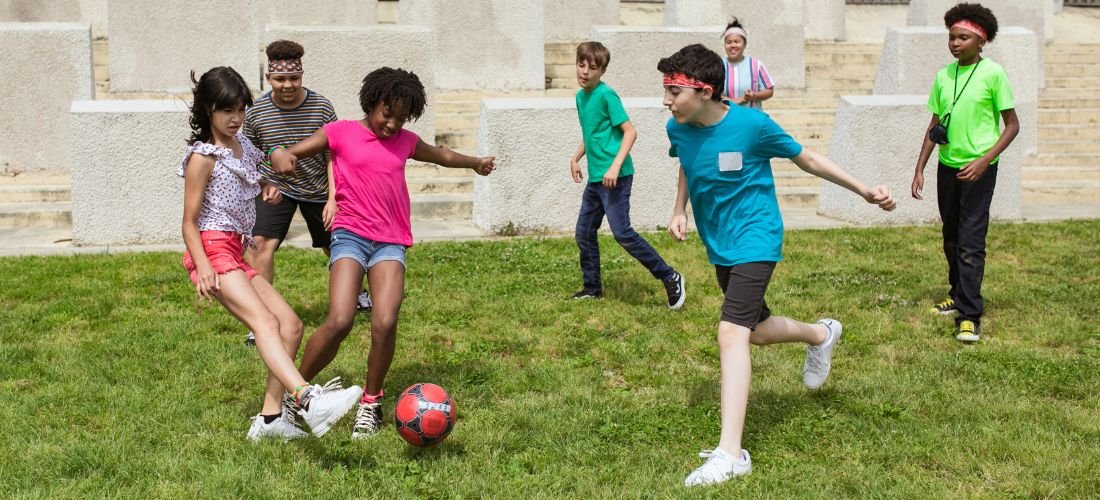
Top Sports for Kids to Build Strength, Skills, and Confidence
Selecting the best sports for kids isn’t just about maintaining their healthy living. Sport increases children’s confidence, develops new skill and improves their coordination and strength. The right sport can enhance a child’s physical and mental growth, whatever their interest is in running or swimming or playing a sport as part of a team or practicing a sport alone.
Sport also helps children acquire a myriad of other life skills, including self-discipline, patience, teamwork, and making decisions. Children don’t have to be pushed into competitive training at a young age by parents. The aim is to enable them to enjoy being active, experience a variety of activities and become lifelong active human beings with healthy habits.
Below are a few of the most effective sports that children can choose to play and help them grow and develop throughout every aspect of their life.
What’s good about Sport for Kids?
Sports is an integral part of a child’s life. They promote children’s physical growth and develop the ability to communicate; problem solve and strive to achieve.
The beneficial role sports play in children is:
- Improved physical strength: Running, jumping, swimming, and other movements strengthen muscles and promote healthy bones.
- Better coordination: Sports facilitate children’s coordination, balance, and quick reaction.
- Self-assurance: children feel good about themselves when they learn a new ability and practice.
- Improved social skills: Children learn how to communicate, cooperate, and respect others during team activities.
- Improved concentration: Instructions, practice, and game strategy increase concentration.
- Good health practices: Active children are more likely to be active in their later years.
The World Health Organization (WHO) recommends at least 60 minutes of moderate–vigorous activity daily for children and teens between the ages of 5 – 17. Exercises, outdoor games, sports, and cycling are examples of this activity.
The top ten sports for kids to build strength, skills, and confidence
Each sport has several advantages. Some concentrate a specific part of their athletic training on developing physical strength, and others on balance, coordination, concentration, or teamwork. Parents can play around with these 10 sports; they could choose to go with their children.
-
Football
Football is a very popular game for children to enjoy. It involves balancing to keep all parts of the body moving, kicking, passing, and controlling the ball while running. The simplest passing games can be adopted before they are able to learn the rules of match play and team collaboration.
Benefits of football:
- Works to build leg strength, stamina, and endurance.
- Improves balance, agility, and coordination.
- Promotes working cooperatively and collaboratively
- Develops the ability to make decisions and think on their feet.
Football is suitable for physically active kids who like to engage in group activities and play games with friends.
-
Swimming
Swimming is an all-body workout combining arms and legs, shoulders, and core. Moreover, it assists children in strengthening their health while developing their physique without putting excess pressure on their joints. It is also a key life skill that, in the hands of correct teaching, can enhance water safety.
Benefits of swimming:
- Builds general fitness of muscles and stamina.
- Stimulates control and coordination of breathing.
- Supports cardiovascular fitness.
- Develops water confidence.
They are able to begin the supervised water familiarization and age-appropriate swimming lessons.. Even when a child is capable of swimming, it is still important for child supervision.
-
Basketball
Basketball is a fast-paced game requiring you to run, jump, pass and shoot! Children learn to control the ball and move around the court and the impact of the ball on self and others. These activities result in level of alertness – both physical and mental.
Benefits of basketball:
- Improves leg strength, arm and core.
- Improves hand-eye coordination, balance.
- Develops speed and agility.
- Encourages leadership and promotes teamwork.
The kids that enjoy playing active games/challenges/learning new things with others, basketball is a good sport.
-
Gymnastics
Gymnastics captivates the control of the body, flexibility, strength and balance. Children are learning the following skills (with appropriate supervision) to roll, jump, stretch and balance. These moves are learnt to enable them to learn how to use their bodies.
Benefits of gymnastics:
- Strengthens arm and shoulder structures and foundation.
- Improves flexibility and posture.
- Gets better balance and body awareness.
- Encourages patience and self-confidence.
It may be suitable for children who like slow paced movement and are challenged in their development (loving to be challenged).
-
Badminton
The badminton is one of the interesting sports played for a racquet type game and requires the player in this game to be quick in the movement and concentration. Children will have the opportunity to develop striking, court movement and footwork to respond to an opponent’s shot. Hand-eye co-ordination and action to exercise outside!
Benefits of badminton:
- Improves reflexes and reaction time.
- Becomes more agile and with stronger legs.
- Strengthens hand-eye coordination.
- Directs attention and makes independent choices.
If children enjoy a game in which they play individually or with a single opponent or if they want to excel at speed, then they should look into Badminton.
-
Cricket
Familiarises the children with the basics of the game: Batting, Bowling, Catching and Team Work through cricket. It’s a game for children from every field, as skills required for the two play roles differ. It also assists them to be patient and perseverant when playing a game.
Benefits of cricket:
- Improves hand-eye coordination.
- Engages in developing throwing skill with accuracy and reflexes.
- Organises stamina and fitness in the context of physical actions.
- Helps to cooperate, be disciplined, and supportive with patients
The kids can begin with softball and simple equipment and gradually build up their participation and training with relatively complex equipment.
-
Tennis
Tennis is an active sport that requires concentration, attention and mental agility. Children are taught to serve, rally and court set-up. This is something that needs to be practiced frequently to let them know that it’s important to be consistent and practise.
Benefits of tennis:
- Improves arm and leg muscles.
- Globally enhances balance and co-ordination.
- Gains the ability to be agile and quick at reacting.
- Promotes thinking for oneself and self-assurance.
Tennis might be appropriate for kids who value learning individual abilities and enhancing their own objectives.
-
Athletics
Athletics consists of running, jumping and throwing events with other track and field events. Offers children opportunities for sensorimotor exploration – not limiting the kind of movement.
Benefits of athletics:
- Improves agility, stamina and strength.
- Increases muscular strength and promotes good bone health.
- Develops an understanding of coordination and balance.
- Encourages setting goals and being determined.
Clearly a feasible option is athletics; there are many sporting activities that children can partake in if they have an interest and an ability.
-
Martial Arts
Children acquire the movement skills desired and learn to apply and practise techniques safely in martial arts such as Karate, taekwondo and Judo. Typically, these will include reproducing simple movements, balancing and listening to instructions.
Sources of advantages to martial arts:
- Improves strength, flexibility and co-ordination.
- Enhances ability to focus and control of self.
- Knows how to behave and respect others.
- Progressively becomes confident in skills.
Parents have the responsibility of choosing a programme of a suitable age that nurtures good technique and is under the care of suitably trained facilitators.
-
Volleyball
Volleyball is a team game that involves ball hitting skills, setting, backward passing and ball transmission skills. Children start to get further in their independent gross and fine motor control and communication with peers to sustain play activity.
Benefits of volleyball:
- Strengthens the muscles of the arm, shoulder and legs.
- Better jumping skills, co-ordinating skills.
- Builds communication skills; creates good team working within the project.
- Becomes confident in groups.
In case you have small kids, a way to help ease you in will be to go with lighter balls, and lower nets.
What sport should you choose based on your child interest?
No one sport is the best sport for all children. The selection might be based on their interests, physical skills, comfort, willingness to take part etc.
This evaluation table may help parents to compare among sports.
| Child’s development goal | Sports to consider |
| Strength throughout the body | Swimming, gymnastics |
| Stamina and endurance | Football, athletics |
| Balance and flexibility | Gymnastics and martial arts |
| Hand-eye coordination | Badminton, cricket and tennis |
| Teamwork and communication | Football, basketball, volleyball |
| Focus and discipline | Tennis, martial arts, cricket |
| Speed and agility | Badminton, football, athletics |
Parents also should give children a chance to try a variety of sports rather than require them to commit to one sport right away. Children find out through trying various options what they like and are able to expand their physical skills.
Selecting the sport for your child can be a difficult decision to make
Parents need to think of a number of essential factors before sending their children to a sports academy.
-
Only look at your child’s own activities that intrigue them
Some kids like team games; individual would be preferable for other. They can be more rewarding to practice with their interest.
-
Create their age and fitness readiness chart, completing details such as age, size and fitness label
There should be an age-appropriateness for a sporting activity. More structured training may be appropriate for older children; movement training may be more basic for younger children and play sessions may be more related to the basic movements.
-
Be certain you find a qualified coach
A great soccer coach understands that youngsters are all different and learn differently. Make sure to find the teachers who emphasize correct technique, safety, encouragement and continuous improvement not constant victories.
-
Check Sports Facility
Quality of playing surface, equipment and light and safety set up are key factors. The children need to use the right equipment and it should be clean for their age group, for whatever type of sport they are playing such as football, badminton, swimming or basketball.
-
Live a Healthy Balance
Sport activity learning, rest, family and interests outside sport activity should all be part of sporting and be incorporated into all school activities. Please do not engage children in too many training/drills or before they are ready to participate in contests.
How much exercise does your child need?
There is a need for frequent movement throughout the children’s day for healthy growth. The amount and intensity of activities will vary according to level of age and development.
Adhere to health care and general precautions suggested by WHO (or other public health guidelines):
- Children between the ages of 3–5 years should be active throughout the day.
- Children and adolescents 6-17 should get 60 minutes of moderate to vigorous physical activity per day.
- There should be at least three muscle strengthening activities for school-age and adolescents 3 days a week.
It’s not always participation in an athletic program to be physical activity. This includes other activities like cycling, running, outdoor games, dancing and playing with friends.
The task for parents is to make moving fun, not another chores list for children to undertake.
FAQs
Q1. What sport would you find to be the best for strength training with children?
Ans. Strengthening exercises: swimming, gymnastics, football and athletics are good for strengthening. These could be several physical skills which will need to be practised across all sports and physical skills will be developed throughout age-appropriate regular practice.
Q2. What is the correct age to start sports?
Ans. In preschool the children do have an opportunity to have some learning in PE. Learning these simple skills is possible most of the time by the age of 6 and they will enable most children to participate in sports that demonstrate structure (this will vary based on the sport, the child’s physical, mental and social readiness).
Q3. Which is more optimal for kids: individual sports and to team sports?
Ans. The other advantages of each of them. Skills of team sports are educated that involves communication, ‘cooperation and team work’ and skills of individual sports are educated that involves ‘independence, concentration and self-motivation skills. The two can be applied to children’s play in the sharing of good.
Q4. What is the amount of sport to be included per day?
Ans. Children (ages 6-17) should engage in moderate to vigorous physical activity 60 minutes, daily. This could be through physical activities, outdoor play, cycling and more active activities etc. May be able to do the activity in the day.
A5. What helps parents to get the kids to engage in sports?
Ans. Not pressuring kids to win, accepting for them what they are doing and give them chances to try out some of the activities can help to encourage participation. The ease of a sports facility, coach who is sports facility and parent oriented may also help to encourage regular attendance at sports facility by parents and coaches.
Conclusion
For children’s growth, physical games are very important that are performed in their childhood. They contribute to building kids’ body strength, coordination skills, social skills and self-confidence. There are many different sports which are explored such as football to swimming, badminton to gymnastics and so on.
It’s not simply the rivalry of the game and if it is better equipped. It’s all about knowing your kid’s interests and making a conducive learning area for him/her to enhance. Let the kids try out a variety of sports, have it celebrated and enjoy the process. With activity being a part of their life children will be more likely to get used to healthy habits that will carry on into adulthood.