



Sports Injuries in Children: When to Worry
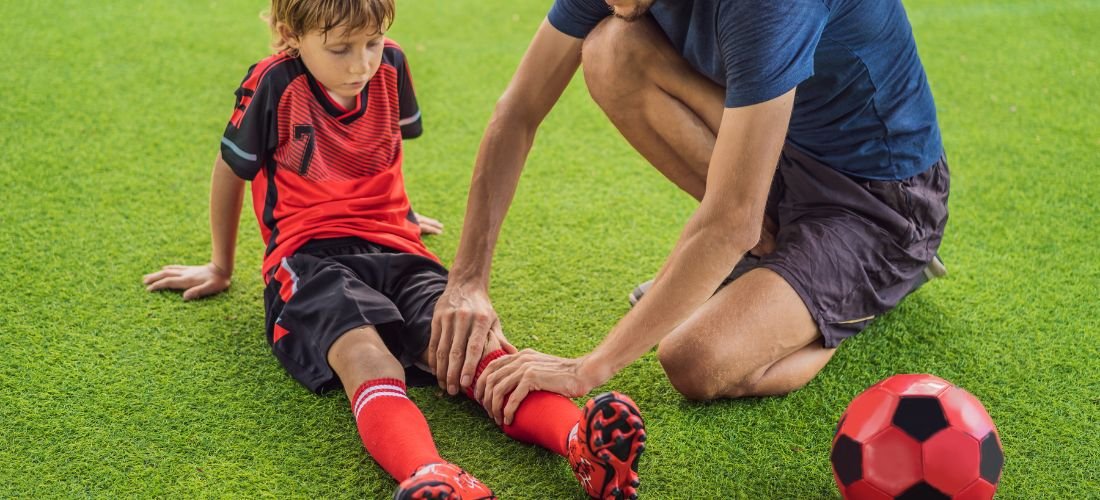
Sports is part of childhood! Through football, cricket, badminton, basketball, swimming, and other sporting activities, children are confident in the game, which develops their team working and cooperation skills. But accidents can occur while in practice, performing at meets, and even at places where you’re not training. It’s important for parents to know about childhood injuries and when a minor injury requires rest and when a child should seek medical help.
Most injuries are superficial and can be treated so that they heal up better. Some injuries may, however, involve the ‘growing bones’ or joints and/or muscles, so parents must never dismiss unusual pain or swelling.
In this article, we will be covering common paediatric sports injuries, when sports-related injuries might be a cause for concern for parents and, finally, how to avoid sporting injury and when to seek medical advice.
-
Why Are Children Prone to Sports Injuries?
Children’s bodies are still growing and developing and differ in makeup from that of adults. They have developing bones, muscles, joints and growth plates, and this makes some injuries more of a concern during childhood.
Children may also be learning and developing new sporting skills, developing their balance, physical strength. However, when they are not supervised properly during their training or if they do so over extended periods of time or with bad technique, there is a greater risk of injury.
The following are all common causes for children sustaining injuries during sport:
- Failure to warm-up and stretch.
- Playing on poor-quality playing surfaces or on uneven surfaces.
- Using unsuitable shoes or sports equipment.
- Enduring excessive training with insufficient rest.
- Faulty playing or body movements.
- Sudden changes of speed/stopping, collisions/falls.
- Taking part in an activity even when it hurts.
- Playing with pains or injuries.
Coaches, parents and school should collaborate to make sports safe and free of unnecessary risks for the children.
-
Common sports injuries in kids
Child injuries resulting from sports can develop over a prolonged period of time or occur rapidly. Some happen as a result of falls or collisions and others from repeated motions during training.
Some frequent injuries that parents should be aware of:
-
Sprains
Sprains occur when a ligament (the soft tissue that attaches two bones together) becomes stretched or may tear. It is normally caused in the ankle and/or wrist with running, jumping or a quick lateral change of direction.
Common symptoms include:
- Pain around the joint.
- Swelling and tenderness.
- Sometimes bruising will be felt.
- Mobility of joint is difficult.
-
Strains
Strain: Damage to muscle or tendon. It can happen if a child stretches a muscle too far and/or performs excessive repetitions of an action in a short number of time/hours without enough rest breaks.
These include strains of the hamstrings, calves and thighs.
Muscles may be either painful, stiff, swollen or weakened.
-
Fractures (Broken Bones)
A fracture is an injury in which a crack or break has developed in one of the bones. It may occur following a fall, blow or collision in sporting activities like football, cricket and basketball.
Be aware of signs of:
- When pain starts to worsen and/or increase.
- Swelling around the injured area.
- Unusual posture and/or deformity.
- Arm or leg pain (such as to the extent that the arm or leg is not usable)
- Pain when putting weight on the affected limb.
A fractured bone should be evaluated. Don’t try to break or fix the bone.
-
Growth Plate Injuries
Cartilaginous areas of the longer bones are developing in children’s growth plates. These promote the growth in the length of bones and slowly form solid bone when children grow up.
Repeated stresses, falls or collisions can induce vulnerable sites of damage. Symptoms consist of having pain, swelling and tenderness around the joint. It may be hard to determine if the bony area is injured because it may appear as a typical sprain, therefore, if the growth area is beginning to hurt, seek medical help.
-
Knee Injuries
Football, basketball and athletics and other running jumping activities are at risk of knee injuries.
Common problems include:
- Knee sprains.
- Tendon irritation.
- Overuse-related pain.
- Swelling due to fall or collision.
If symptoms of knee pain occur again (more than one episode), walking or swelling problems, parents should think about and make an appointment for a medical evaluation.
-
Head injuries and concussions
Children can suffer a head injury from a fall, or from a collision with another player or if they are hit by a ball. Concussion is one kind of brain injury which may temporarily disrupt the brain’s function.
Possible symptoms include:
- Headache or dizziness.
- Nausea or vomiting.
- Fogginess or forgetfulness.
- Light-sensitive and/or sound sensitivity.
- Fatigue or alter in behaviour.
A person with any head injury that results in loss of consciousness for a more than a few seconds should undergo medical evaluation if a concussion is suspected. Take child off sports, and do not return on same day.
The Differences between Sprain and fractures in Children
Sprains and fractures can be easily misdiagnosed among children! These can lead to some pain, swelling and loss of joint function.
To describe the difference the following comparison would be helpful.
| Feature | Sprain | Fracture |
| Affected area | Ligament | Bone |
| Pain | Around a joint | Around the injured bone |
| Swelling | Common | Common |
| Bruising | May occur | May occur |
| Movement | May be painful | May be painful or difficult |
| Diagnosis | Clinical examination | Often requires an X-ray |
Important Note: Children should have symptoms distinct from the sprain itself which may help to differentiate between sprain and fracture. Fractures can be difficult to distinguish from sprains, and have minimal swelling. The doctor might order an x-ray and/or other test to confirm the injury.
-
Recognizing Serious Injury in a Child: When to Worry?
Not all injuries are creating hospital injuries. The bruise or minor muscle pain might get better if you rest. But parents should understand the signs that indicate something is wrong and more serious.
Some of the signs that doctors should look out for are:
Promptly bring your child in for a medical evaluation if they have:
- Pain that is so bad or getting worse.
- Large amounts of swelling or bruising.
- Problems walking or using arm.
- Pain directly over a bone.
- Any joint with reduced function.
- Multiple pain related episodes with the same activity.
- Symptoms that do not improve with rest.
- A joint that appears abnormal or wobbly.
Is It a Medical Emergency?
If your child has symptoms of:
- Difficulty breathing.
- Loss of consciousness.
- Head injury seizures.
- Repeated vomiting following a head injury.
- Trouble concentrating, getting sleepy, more so than usual.
- Weakness, numbness or lack of coordination.
- A visibly deformed limb or suspected serious fracture.
- Persistent, unaided bleeding.
The head injury symptoms might not be noticed several hours after the crash. Falling ill or becoming more ill parents should not ignore their child and seek emergency treatment.
-
What Should Parents Do If a Child Gets Injured While Playing Sports?
The first step should be to end their activity and check the injury. Do not ask continue to play, even though the pain seems reasonable
These are steps that a parent can take if a minor muscle and/or joint injury, while keeping a close eye on the child.
- Stop activity: Assist child to stop activity and rest.
- Use a cold pack: Wrap an ice pack in a towel and use as needed for short periods to help relieve pain and swelling. Make sure ice does not touch skin.
- Compression: A bandage, If necessary, if not too tight, will alleviate swelling.
- Elevate affected leg or arm: if preferably, otherwise place pillow under arm or leg.
- Monitor symptoms: Signs of inflammation, swollen and/or limping leg.
This treatment is called RICE treatment — Rest, Ice, Compression and Elevation. Can be used for minor injuries as temporary first aid, cannot be used when a serious injury is suspected to avoid medical assessment.
If you have any concerns about the possible fracture, try to avoid unnecessary movement and seek medical assistance. Try not to go over the injured area with massage and do not press on them to walk.
-
How to Prevent Sports Injuries in Kids
Although there are some injuries cannot be prevented, there are many different common risks for injuries that could be prevented by simple safety measures taken by parents and coaches.
-
Begin with a warm up!
It doesn’t take long before children play; get bodies ready (5-10 minutes). Muscles and joints can be prepared for activity through light jogging, exercises and movements and dynamic stretching.
-
Use Proper Sports Equipment
Children should wear to the appropriate equipment for the sport, their age and body size.
Examples include:
- Good fitting sports shoes.
- Cycling helmets and appropriate contact sports helmet.
- Football Shin Guards.
- Knee pads and elbow pads (as necessary).
- Safety glasses for sporting games that have a risk of incurred eye injuries.
-
Avoid Overtraining
Adequate recovery between training sessions within the Weight Watch should be provided to children. Overuse injuries are caused by fatigue, strain or overuse of the muscles.
The children need to be exposed to and involved in as many age-appropriate activities as possible in a manner that doesn’t lead to a premature concentration on one sport.
-
Give lessons and teach the correct playing technique
Coaches should instil safe running, jumping, landing, throwing and changing of direction in children. Gliding movements instruct youngsters to build their physical abilities in a way which helps to minimize strain on their bodies.
-
Ensure Safe Sports Facilities
Injury prevention is also a part of the importance of the playing surface.
It is important that schools and sports academies ensure that:
- Play surfaces are kept to access and maintained.
- No sharp objects or those that are slippery and icy.
- Sports equipment is regularly inspected.
- Water drainage prevents water build-up.
- Adequate sports surfaces are added to activities.
-
Promote plenty of fluids and rest
Fluid at enough levels. Children require adequate fluid intake prior to, during and after exercising. Coaches must also have rest periods for participants particularly during hot, humid periods.
The American Academy of Paediatrics’ offers guidelines to reduce the potential for injuries sustained as a result of sports-related activities: proper equipment, conditioning, rest periods, hydration, age-appropriate sports participation.
-
School and sports academy role in injury prevention
Schools and sports academies are important helping to keep young athletes safe. Children receive several hours of practising and playing sport and the quality of the coaching, equipment and sports infrastructure is important.
A safe sport environment should have:
- Coaches trained to recognise children’s physical abilities.
- Appropriate, safe warm up and cool down.
- Age-appropriate training schedules.
- First aid and emergency telephone numbers available.
- Ongoing checks on playing surfaces, equipment and weather conditions.
- Establish guidelines for unsafety in playing actions.
Other organizations like sports infrastructure companies can also help by ensuring suitable playing surfaces are provided for various sports and activities. A decent game of football, athletics track, basketball court or badminton field can create a more consistent playing environment if properly planned and designed.
Gallant Sports & Infra Pvt. Ltd. is committed to building sports infrastructure in schools, sport academies and other sports structures. Better environments for children to participate in sport are created when there is a balance of surfaces selection, construction quality and maintenance.
-
After Injury – When Can Children Return?
Parents often make the error of letting children re-enter sports too early. If the pain begins to get better, the area affected by the injury may not be fully healed.
Before returning to regular activities, children should:
- Not to suffer during everyday activities.
- Regained appropriate strength and movements.
- Complete any prescribed rehab.
- Take care of your body as your doctor says.
- Slowly add more movement.
If a fractured or any serious sprain or other more severe injury has occurred, then it is preferable to have a member of the Health Care Team make a final medical evaluation before the child returns to training.
There is a gradual return to sport program needed for children recovering from a concussion and medical clearance is mandatory. Never allow someone to play again just because he or she feels better.
FAQs
Q1. What are the most prevalent injuries in sport for kids?
Ans. Fractures, muscle strains, bruises, sprains, knee injuries and overuse injuries are all common sports injuries in children. Contact sports and unintentional falls can also result in a head injury and/or concussion.
Q2. At what point should I take my child to the doctor when he or she has an injury from a sports activity?
Ans. If they are in severe pain, has a great amount of swelling, moving and walking is difficult, bones feel tender and there is trouble moving, take your child to a doctor. In cases of loss of consciousness, breathing difficulties, fits or any signs of serious head injury, or suspected major fractures, call for emergency medical assistance.
Q3. What are some signs of child sprains or fractures?
Ans. A sprain is a damage to the ligaments; a fracture is a break in the bone. Their symptoms may be the same – swelling and pain – but these cannot be used to confirm that the two are different. Diagnosis requires a medical examination, in most cases an X-ray.
Q4. What should the coach do if a child has minor injuries and wants to continue taking part in sports?
Ans. If a child feels pain during an activity, they should stop their activity. They should only return when the injury is healed long enough to be able to move them comfortably. If there are significant injuries then they should be medically guided before going back to play.
Q5. How is an injury to a growth plate bad in children?
Ans. Growth plates assist children’s bones grow. Injuries to these regions can, at times, impair normal development of bones if not diagnosed and treated correctly. Any pain or tenderness around a growing bone that does not subside should be checked by a health care provider.
Conclusion
Children’s physical fitness, confidence and general development depend on Sports. But always it must be their safety that is foremost. Being aware of the typical sports injuries in children allows parents to catch any warning signs early on and, consequently, take the proper action before a minor injury turns into a major one.
When children are young, the emphasis is on keeping them active through fun exercises while educating them to take their body’s feedback into account when performing movements. Many of the risks of injury can be mitigated by appropriate coaching, a good supply of sporting equipment, safe playing and adequate recovery practice.
It is important to keep in mind that kids should never be forced to play while they’re in pain. A healthy sporting environment is one that ensures children enjoy and can learn and improve in sport, and ensures their safety.