



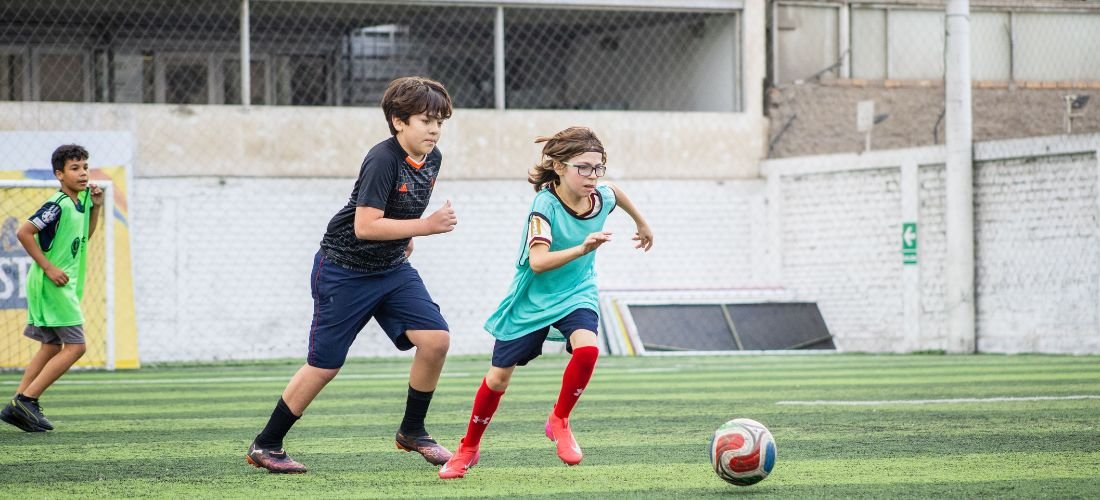
Kids Sports Training Guide for Parents in India
Finding a Kids sports training programme that’s suitable for your family might be difficult for parents. You might be thinking of which sport would you like your child to play, when they should begin, how much they should be training, and the academy you choose should be safe, or what exactly you need to look for. Fortunately, sports don’t need to start with competition. The first object of sports training for children is to enable them to enjoy the act of movement, develop their fundamental movement skills and build confidence.
We can list a number of sports that children can enjoy in India – football, cricket, badminton, basketball, tennis, skating, swimming, athletics etc. It is possible to create a healthy balance between the studies, play, fitness, and rest with the right children sports training in India.
The Value of Sports Training to Children
Sports can be more than just a way to help children pass the time after school. Regular physical activity helps children to develop their movement skills and fitness and confidence and provides children with opportunities to engage in working collaboratively.
Moderate to vigorous physical activity is recommended for children and adolescents aged 5-17 for at least 60 minutes per day when averaged across the week. It also suggests exercise to increase muscles and bone strength at least three times a week.
Physical benefits of sports
Children can learn to develop through regular activity doing the following:
- Better coordination and balance
- Cardiovascular fitness
- Healthier muscles and bones
- Agility and flexibility
- Better movement control
- Healthy physical habits
Don’t only use sports for something to increase the strength of children. Children’s familiarity and confidence in movement is also enhanced through children’s experiences of running, jumping, throwing, catching and changing direction.
Mental and Social Benefits
A good sports environment can also impart all-day skills to children. They develop listening skills to pick up instructions, practice a skill many times, learn to work with teammates, and experience success and failure.
Sport can thus serve to support the following qualities as:
- Discipline
- Teamwork
- Communication
- Confidence
- Patience
- Focus
- Responsibility
It is not the objective to become a professional athlete for all children. A positive relationship with physical activity is often a more successful goal for many children, continuing as they get older.
When do kids need to get into sports training?
Any age is not the ideal age for all kids. The type of starting point will vary due to the child’s level of development, interest, ability to follow instructions, etc and this will depend on the activity.
With younger children, the emphasis should be on fun and physical activity rather than on training in the sport. Training can be gradually increased as a child progresses in their growth.
Age-Wise Sports Training Guide
| Age | Main Focus | Suitable Activities |
| 3–5 years | Movement and coordination | Running, jumping, throwing, swimming, playful games |
| 5–7 years | Basic sports skills | Football, skating, swimming, gymnastics, badminton |
| 8–10 years | Skill development | Cricket, football, basketball, tennis, badminton, athletics |
| 11–13 years | Technique and game understanding | Sport-specific coaching and regular practice |
| 14+ years | Performance and competition | Advanced coaching, fitness and competitive training |
These are only a suggested guidelines and not rules. Learning to excel at sports is possible at any age, and some children can start to learn a certain sport at a younger age.
To parents, the Indian Academy of Pediatrics recommends keeping an interest in mind of a child along with some practical aspects like the cost of the sport, time availability, proximity and convenience of coaching.
How to Select the Appropriate Sport?
Like all things, the parents’ job has the potential for oversimplification, a mistake of which one of the most common is to select a sport simply because it is a popular choice. Cricket might be an immensely loved sport in India, but not every kid may appreciate cricket.
Rather, begin by working with your child and the things that he or she naturally enjoys.
Review, contradict, and exercise your curiosity about Your Child’s interests
Ask simple questions:
- Does your child enjoy running?
- Do they like playing with a ball?
- Do they like activities alone, or together?
- Would they like to play with other players?
- Do they like to engage in water sports?
- Do they like taking part in new exercises?
- Are they games that are played in a team?
The answers that your child gives you will be helpful clues.
Think of the different types of sports
It doesn’t need to be a sport that you choose right away. Providing children with opportunities to undertake a variety of activities to find out what they enjoy.
For example:
Team games: As teammates can be encouraged to speak and play cooperatively such games as football, cricket, basketball, hockey and volleyball can be played.
Racquet sports: Badminton and tennis require coordination, control of body and eye.
Individual sports: Provide opportunities for children to develop personally through the sport of athletics, swimming, skating and gymnastics.
What’s important is to allow some choice to the child, rather than letting the decision all the way down on them.
What should sports training for children be composed of?
Simply having children run laps, or repeat harder drills, isn’t a good programme. Children’s sports training should be geared to their age and skills should be gradually introduced.
A session might consist of:
- Warm Up – Use simple movements and exercises to warm up the body for activity.
- Movement training – Children work on running, jumping, balance and coordination.
- Skill practice – Coach presents sport-specific skills.
- Games or drills – Children apply those skills to a fun and practical situation.
- Cooling down – Ending the session with lighter activity and recovery.
The approach that is outlined by TIDA Sports is also reflected in this type of structure which employs a range of skill-based drills, warm up and cool down, fitness activities, as well as practice games with the kids’ programmes.
Why Warm-Ups Matter
A sudden, sharp change from sitting (class) to very active (games) is not advisable. Use a warm up which could be a gradual one, preparate them for moving and provides the coach a time to organise the session.
Light jogs, mobility exercises, simple running, coordination exercises can be employed in the warm up.
Determine the frequency of children’s training
The frequency of training depends on the child’s age, sport, intensity of training and schedule.
Parents should remember that training is not an active lifestyle and should be used in conjunction with it. Physical activity that also occurs outside of school, including in free play, physical education, walking and cycling, also contributes to physical activity. Physical activity is defined by WHO as the performance of physical effort, whether for recreation, competitive activity, exercise, transit or play and games.
This is a basic weekly regime:
| Activity | Example |
| Sports coaching | 2–4 sessions per week |
| Free play | Regular opportunities during the week |
| Outdoor activity | Walking, cycling or playground games |
| Rest | At least some easier days |
| Family activity | Weekend walk, swimming or outdoor game |
The timings will be customized based on the child. The quality (not the quantity) of the training is not guaranteed.
Parents need to know what to do to avoid overtraining
Children may require time to recuperate. It would be better for training volume and intensity to increase slowly (not sudden) over time.
These guidelines say that participation in certain sports, as well as increasing levels of exercise intensity (especially if it’s increased too rapidly) can increase the risk of injury.
Parents should be alerted to the following regular complaints by children:
- Persistent pain
- Unusual tiredness
- Poor sleep
- As a result of such behaviour, there is a loss of interest in training
- Repeated injuries
- Irritability around sports
- Increased training, but decreases in performance
It’s not the child’s fault if he or she needs a timeout; it is the child’s right.
What Is a Parent Looking for in a Sports Academy?
Selecting a sports academy for kids isn’t only a matter of location. Before joining the programme, parents should visit the setting and ensure that they are familiar with how its operation is to be followed.
-
Qualified & experienced coaches
Coaches must be familiar with working with children and not just adults. They should be able to explain each technique clearly and accurately and be able to adapt tasks to the age and ability.
-
Age-Appropriate Training
The training for a four-year-old should be different to that of a 14-year-old. Find age and skill level-based groups and/or programmes.
-
Safe Infrastructure
Ensure playing surface and equipment, change areas, lighting and general cleanliness of the facility are in good order.
Outside sports – inquire about surface maintenance and drainage and how the facility will manage rain. When indoors look for ventilation, flooring and safety equipment.
-
Reasonable Batch Size
Individual attention may be challenging with very large groups. Inquire about the number of kids a coach coaches, and whether there is sufficient information for beginner coaches.
-
Positive Coaching Environment
Observe coaches’ verbal interactions with young people. Encouragement, correction and learning should form the basis of a good session – with no excessive shouting or pressure to win!
-
Clear Communication with Parents
Parents should know:
- Days and time for training
- Fees
- Equipment requirements
- Competition opportunities
- Attendance expectations
- Safety procedures
- Include a policy for cancellation and replacement
Transparency makes the experience easier for the parents and children.
Should Children Play One Sport or Multiple Sports?
No one answer fits all. If a child loves more than one sport, then continue to explore them, if a child loves one sport it may be the one that they are interested in continuing to explore.
Exposing children to multiple sports can provide them with an exposure to various movements and skills. Football teaches hand-eye co-ordination and quick reactions on the run, and badminton teaches quick reactions and changing direction.
When children reach an older age and are more serious about a sport, they may decide to put more practice time into this sport. It should not be a pressure fade, but rather a fade based on the interest, development and goals of the child.
Sport and School are a Match – How to Make Them a Match for Parents
Parents may sometimes only be concerned about sports consuming too much time out of school. When it comes to solution, it’s typically more fitful planning than eliminating sports altogether.
Devise a regular schedule (homework, meal, sleep, sports and free time). If training occurs at a specific time throughout the day, children can develop time management skills throughout the day.
Other useful skills include punctuality, preparation and time management—skills important to sports. Children should not be over scheduling, however, to ensure they have adequate recovery and sleep.
What kinds of equipment do kids need?
It depends on the sport for the equipment. It doesn’t have to be expensive equipment for the parents when their child is beginning to learn.
Basic Examples
Football: Football shoes, an appropriately sized ball, shin guards and comfortable sports clothing.
Cricket: Bat, Protective Pads, Gloves and Footwear (appropriate).
Badminton: A racket, shoes that have no soles marked with lines and comfort sports clothes.
Tennis: Tennis Balls, tennis rackets, dress appropriate for tennis shoes and a comfortable outfit.
Swimming: Appropriate swim attire (clothes that are suitable for the sport; the coach will advise on this), swimmers are required to have goggles and other pieces of equipment recommended by the coach.
Talk to the academy when purchasing equipment, determine what is necessary. Kids get bigger fast and you’ll only be justified in spending the big money if you look to always have the features you want from an expensive purchase.
The part parents should play in the sports training
There is a role for parents, but they don’t necessarily have to be a child’s coach.
Your biggest task is to establish a good setting.
Don’t pressure, encourage
It is very different to say, “Let’s practise- this is enjoyable for you”-and- to say, “You must win today.
Children can lose confidence when they win every game and their parents are happy or they lose every game, and their parents are not happy. Instead, ask them what they learnt, what they liked and what they would like to know more about.
Encourage effort and achievement
Identify more subtle changes rather than fixated on goals, runs or medals.
For example:
- “Your passing was much better today”
- “When it was hard you kept practising that skill”
- “You were able to hear your coach’s instructions well”
This helps children realize that there are activities involved in improvement which take time.
Common mistakes that a parent should avoid
Educators often feel their own best interests are children’s interests and inadvertently do more harm than good.
This list is here to help you with those common pitfalls:
- Being forced to do anything to a child that they don’t want to do
- Comparing them with other kids
- Expecting fast results
- Paying attention to medals and competitions (only).
- Failure to recognize pain or multiple injuries
- Scheduling too many activities
- Buying expensive equipment too early
- Changing academies after every poor result
- Taking each practice period as a competition
The Indian Academy of Pediatrics explicitly urges the parents to allow their children to participate in sports but not push them into a sport just because the parents like it.
How to know if Your Child is enjoying the Sport?
There is room for other comparisons that can be made with whether or not a programme for sports is working or not.
See if there are any of the following signs:
- Your child looks forward to training.
- They discuss about the players and the team.
- They are interested in learning new things.
- They are becoming more confident.
- They can accept mistakes more easily.
- They are interested in practicing:
- They like being active in some type of exercise.
A child does not need to become a champion for sports training to be valuable.
The role of schools and academies in supporting the kids sports training in India:
There can be improved opportunities for children through the collaboration of schools and academies. The space and access for students can be provided by a school and structured training and sport-specific knowledge can be brought in by professional coaches.
There may be several sports and/or age categories in a strong programme, qualified coaches, safe grounds for play and pocket matches. This can ensure that a sport is available to children that might not be able to find their way into organised sport.
A well-defined explanation of an academy network could be provided by TIDA Sports, for example, which states that its academy networks provide multiple sports venues along with certified coaches and age grade courses from beginner to advance in a number of northern states.
Additionally, schools can investigate various sports development plans, especially sports infrastructure development like artificial turf, badminton court, athletic track and other sports surface.
A reading checklist is available for parents/or carers:
Prior to enrolling your child, you should question yourself or your child’s physician about these questions:
About Your Child
- Does my child actually enjoy this activity?
- Is he/she physically fit to participate in the programme?
- Do they wish to receive structured coaching?
- Are they interested in trying other sports?
About the Academy
- Do the coaches have experience working with children?
- Does the facility have a safety arrangement?
- Will groups be split into age and/or skill groups?
- Is the training programme clearly explained?
- Can the coach concentrate on development and not just on winning?
About the Schedule
- Can training take place during school hours?
- Are you getting enough sleep and/or time for recovery?
- Does my child have opportunities to participate in free play?
- Is there a reasonable time frame that allows all activity to be completed?
If you said yes to most of the above, you are at the right place.
FAQs
Q1. What is the best age to begin sports training?
Ans. No child is too young—or too old—to need a large specially designed kit of toys. Young children can start with play and some rudimentary motor skills, with structured sport specific coaching slowly building up as their coordination, their attention/ interest grows.
Q2. What do you think is appropriate for the number of hours to spend on sport?
Ans. According to the WHO, at least 60 minutes moderately-active to vigorous physical activity should be recommended every week for children between the ages of 5-17. This consists of soccer efforts, along with other moves, including energetic play, strolling and bicycling.
Q3. What type of sport is right for my child?
Ans. No single sport is best. Take your child’s interests, age, physical abilities, personality, facilities available and quality of the coaches into account. Giving children a “chance” to give different activities a chance will make it easier for them to discover what they like.
Q4. How to select the sports academy for my kid?
Ans. Seek out certified coaches, youth-friendly courses and facilities, small groups and a friendly classroom atmosphere. Before taking part usually it is also interesting to watch a session or talk to the coach.
Q5. Do children’s studies get affected by sports training?
Ans. Planning a sports programme need not infringe on academic work. The key is balance. Children should not have an over bush timetable but have sufficient time to do their school work, sleep, have meals, recover and play and do sports.
Conclusion
Children’s sports development should be more than a pipeline to the development of future athletes. In India, a first priority must be to make children active, their confidence expressed in physical activity and help them find out what they love by making them enjoy physical activity.
Good sports coaching for children needs to be age appropriate, of their interest and development. A good programme involves movement, development of skills, play, team-work and etc. suitable rest in addition to winning.
It doesn’t matter if your child decides on football, cricket, badminton, basketball, swimming, skating, tennis or athletics as long as he or she has a good experience. Parent encouragement, effective coaches and safe facilities can make child sports training a healthy aspect of a child’s development – and a habit that remains their sport throughout their lives.